Turning Point Ministries
- 4.9
- Rating
- 500.00K
- Installs
- Free
- Price

 Analysis by App-foxy
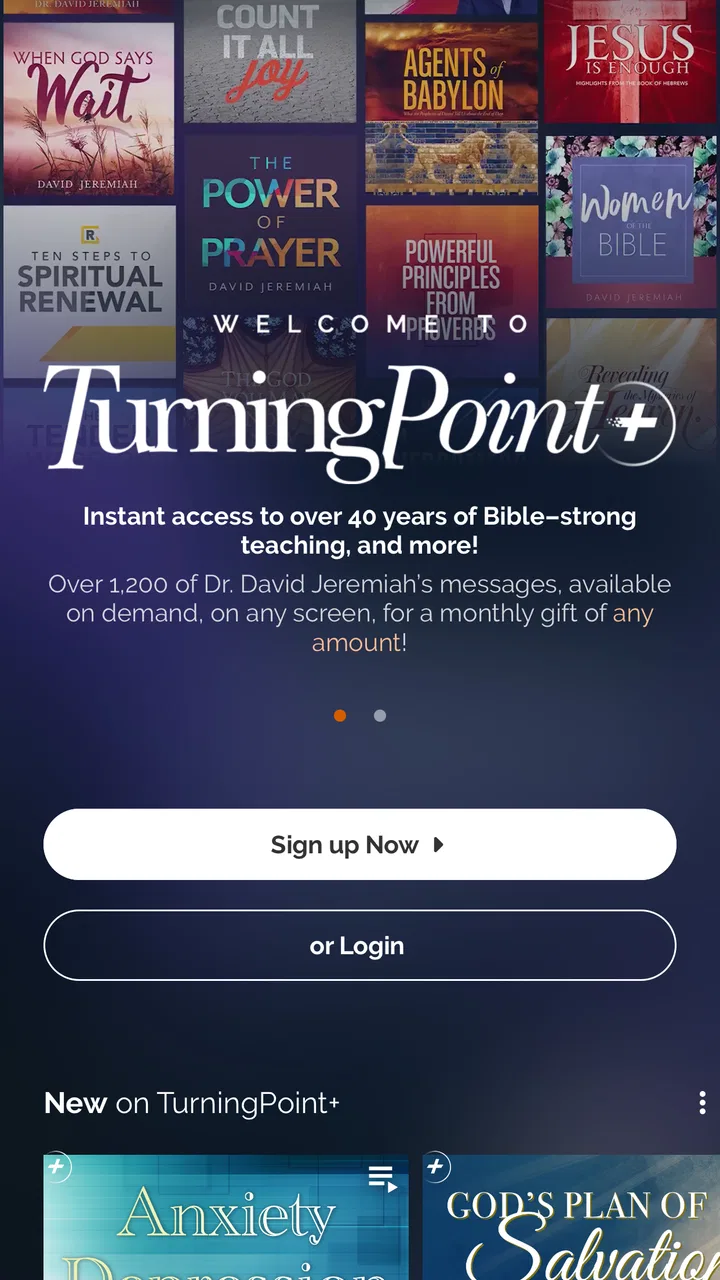
If you want a simple way to keep up with Dr. David Jeremiah’s latest messages, Turning Point Ministries is a focused lifestyle app worth considering. I found its purpose easy to understand from the beginning: it brings recent teaching from Turning Point Ministries into a mobile format, so you can return to it during a quiet morning, a commute, or a short break in the day. It is not trying to be a general social network, a broad media library, or a replacement for every devotional tool. Its value comes from staying centered on one ministry and making that material easier to reach.
That narrow focus is both its greatest strength and its main limitation. If you already look for Dr. David Jeremiah’s messages, the app can make that routine more convenient. If you want a wide range of speakers, denominations, study methods, or unrelated lifestyle content, you may find it too specialized. After spending time with it, my overall impression is that it works best as a dependable companion for regular listening and reflection rather than as an app you open only when you need a large search engine for religious content.
What to expect before you begin
Turning Point Ministries is a free app in the Lifestyle category, developed by Turning Point for God, Inc. Its store summary emphasizes immediate access to recent messages from Dr. David Jeremiah, and that description is a good guide to the experience. The app is built around access and continuity: you install it, find the available ministry content, and create a personal rhythm around it. I would approach it with that expectation instead of looking for a complicated course platform or an all-purpose Bible study suite.
You May Also Like

 Blood Strike: 2.5 Anniversary
Blood Strike’s Loadouts Turn Every Drop Into a Tactical Gamble
A close look at Blood Strike’s custom loadouts: how fast access to signature weapons reshapes its battle royale rhythm, rewards preparation, and narrows the gap between fights.

 Pandora - Music & Podcasts
Pandora’s Music Is Easy to Start, but Harder to Recover
Pandora’s strength is its low-effort path from a seed to a station. Its weak spot is how much confidence it asks you to place in connection, setup, and quiet recovery.

 8 Ball Pool
 Is Built on Rivalries, Rematches, and Routine
A close look at the rivalries, rematches, shared routines, and unanswered safety questions that turn a quick pool match into a persistent mobile community.

 Samsung Music
’s Quiet Strength Is Playing What You Already Own
Its reach comes less from spectacle than from dependable access to a personal library. That simplicity is both the app’s strongest retention engine and its ceiling.

 AccuWeather: Weather Radar
AccuWeather Review: A Quick, Clear Forecast for Everyday Decisions
For everyday plans, the best forecast is the one you can understand quickly. AccuWeather makes rain timing, radar, and local conditions easy to act on, with a few trade-offs.

 Hill Climb Racing
Why Hill Climb Racing Still Turns Crashes Into One More Run
A tiny car, a bumpy hill and one more upgrade: Hill Climb Racing keeps resurfacing because its simple chaos makes every near-miss feel personal.
More From Our News Desk
View All News


The app has been available since December 5, 2011, which gives it the feel of an established ministry product rather than a brand-new experiment. Its current version is 26.1.7, and it supports devices running Android 7.0 or later. That minimum requirement is helpful for people using older phones, although I would still check the operating system on a very old device before planning to rely on it every day. The app is marked for Teen users, so families should still make their own decision about whether its presentation and content suit younger members.
At the time of my review, the app showed a 4.9 average from around 9,200 ratings and more than 2,000 written reviews. It also had over 500,000 installs. Those figures do not prove that every user will enjoy the same experience, but they do suggest that the app has reached a substantial audience and that its focused purpose is clear to many people.
The free download lowers the barrier to trying it. There are in-app purchases ranging from $4.99 to $49.99 per item, so I would not assume that every piece of content or every possible resource is included at no cost. My practical advice is to explore the free portion first and decide whether the app fits your routine before spending money. That approach is especially sensible if you are new to the ministry or are unsure how often you will use it.
One useful way to think about the app is as a bridge between scheduled media and personal reflection. You do not need to wait for a broadcast time to engage with a message, and you do not have to remember which external site or channel carries it. That convenience matters in ordinary situations. I can imagine opening it before work, listening while preparing breakfast, or returning to a message in the evening when I want a quieter pace than a short social-media clip provides.
Who will get the most from it
This is a strong match for someone who already appreciates Dr. David Jeremiah’s teaching and wants a direct, mobile-friendly place to follow recent messages. It can also suit a person beginning a regular listening habit, especially if a single familiar ministry feels less overwhelming than browsing hundreds of unrelated religious videos and podcasts. The focused catalog can reduce decision fatigue: instead of asking what to listen to next across many platforms, you can begin with the ministry’s current material.
I would be more cautious if you are looking for detailed note-taking, academic study tools, or a broad comparison of different interpretations. The app’s identity is tied to Turning Point Ministries, so it is not designed to give you a neutral survey of every Christian teacher. Likewise, people who prefer reading rather than listening may want a separate Bible or devotional app alongside it. The right choice depends on whether the message-centered format matches how you learn.
Another trade-off is concentration versus variety. A specialized app can feel calm and purposeful, but it may also feel repetitive if you want constant changes in style or subject. I would recommend it to a friend who wants consistency, not to someone who treats an app as a discovery shelf for many unrelated voices.
Setting it up without making the experience complicated
My suggested first setup is deliberately simple. Install the app, open it when you have a few uninterrupted minutes, and resist the urge to judge it from the first screen alone. Look for the most recent message or clearly presented starting point, then choose something that matches the amount of time you actually have. A short first session is better than selecting an ambitious topic, becoming distracted, and never returning.
Before you settle into a routine, take a moment to understand how the app presents its available material. Pay attention to whether an item is immediately playable or whether it leads toward a purchase. This is not a criticism of the app’s paid options; ministries often provide additional resources through purchases. The important point is to know what you are choosing before confirming anything, particularly if you are sharing a device with a family member.
I also recommend deciding where the app belongs in your day. If you want it for morning reflection, keep the first session short enough to repeat. If you plan to listen during travel, choose the material before leaving rather than trying to browse while moving. That small habit makes the app feel like part of a routine instead of another source of phone distraction.
For a first-time user, the most reassuring path is to avoid trying to understand every possible section immediately. Begin with the newest available message, listen attentively, and return to the app later. The app’s purpose becomes clearer through use than through tapping every menu. This is one of the less obvious advantages of its narrow focus: you can get value without learning a complicated system.
How I would reach the first meaningful result
Your first successful action should be more than opening the app. Choose one message and give it a defined purpose. For example, listen to it while taking a quiet walk, then write down one idea that you want to remember. That simple workflow turns passive playback into something personal. You do not need a sophisticated study plan to test whether the app is useful; you only need to see whether its content helps you create a repeatable moment of attention.
A practical routine is to use one message across two sessions. In the first, listen without stopping so you can understand its overall direction. In the second, return to the parts that stayed with you and make a brief note in your phone’s ordinary notes app or on paper. This is a useful workaround for anyone who wants deeper reflection without assuming that the ministry app itself includes a full note-taking system.
If you are introducing the app to someone else, avoid presenting it as homework. Send the person to one specific message and explain why you think it may help them. The app is easier to appreciate when the first experience has a clear reason behind it. Asking a new user to explore everything at once can make a focused app feel less approachable than it really is.
Another helpful approach is to connect listening with a real transition in your day. Use a message during the time between finishing work and beginning the evening, or during a regular household task that does not require constant screen attention. This gives the content a natural place in your schedule and reduces the temptation to compare it with fast entertainment apps. In my experience, consistency matters more here than consuming a large amount of material.
The best first goal is one completed message followed by one honest reflection. That result tells you far more about the app’s usefulness than simply browsing its opening screen. If you finish the session feeling that the format fits your attention span and spiritual routine, you have a solid reason to keep using it.
Confusion points and limitations to understand early
The first possible confusion is expecting the app to behave like a general-purpose media service. It is centered on Turning Point Ministries and Dr. David Jeremiah, so the range is intentionally narrower than what you might find on a large podcast directory or video platform. That is useful when you want familiar teaching, but it can feel restrictive when you are searching for another speaker, another tradition, or a completely different kind of study.
A second point is the difference between free access and optional paid material. Because the app is free to install but includes in-app purchases, I would read each purchase screen carefully and avoid assuming that a tap automatically means the content is included. If you are managing spending on a shared device, enable whatever purchase safeguards your phone already provides. This is ordinary good practice, but it matters more when an app offers both free entry and paid resources.
Some users may also expect every message to work equally well for every situation. I would not use the app as background audio when I need to concentrate on a demanding task, and I would not expect a message designed for reflection to answer a highly specific personal question immediately. The material may be most useful when you give it enough attention to consider its meaning rather than treating it as interchangeable audio.
There is also a practical difference between convenience and independence. The app makes access easier, but it does not remove the need for your own judgment. I would compare what you hear with your Bible, your existing study habits, and conversations with trusted people when a topic has serious personal consequences. A mobile app can support reflection; it should not become the only source you use for every decision.
For people with older phones, the Android 7.0 minimum is worth checking before installation. Users who keep devices for many years should also remember that an app can feel different depending on screen size, storage, audio setup, and system performance. I would test one complete session before purchasing anything or building an important routine around it.
How it compares with the usual alternatives
The most obvious alternatives are a podcast app, a video platform, a browser, or a Bible study app. A podcast app generally offers broader discovery and may be better if you want to combine Turning Point with many other programs in one queue. A video platform may provide more visual context and recommendations, but it can also pull you toward unrelated content. A browser gives flexibility, although it may require more searching each time you want to find the latest message.
Turning Point Ministries has an advantage when your priority is a direct connection to this particular ministry. You are not depending on a general recommendation algorithm to decide what appears next, and you are less likely to lose the intended material among unrelated entertainment. That focus can make a meaningful difference for someone trying to protect a quiet daily habit.
On the other hand, a dedicated Bible study app may be better if your main goal is reading plans, verse comparison, cross-references, or structured annotation. I would use Turning Point Ministries alongside such an app rather than expecting it to replace those tools. The two formats serve different purposes: one gives you access to ministry messages, while the other can support more hands-on text study.
My personal choice would depend on the week. For a message-led morning, I would choose Turning Point Ministries because it keeps the starting point simple. For research or comparing interpretations, I would move to a broader resource. That is not a weakness unique to this app; it is the natural cost of choosing a focused experience over a large, flexible library.
Building a routine that remains useful
After your first successful session, the next step is to create a modest pattern rather than chasing constant use. Pick a regular day or time, then return to the app when you can listen with reasonable attention. If you miss a day, do not try to compensate by forcing a long session. The app is more helpful when it supports a sustainable rhythm than when it becomes another obligation.
I would keep a simple record of the messages that genuinely helped you. Since a separate notes tool may be more practical for detailed writing, note the title or main subject in your own words and add one sentence about why it mattered. Over time, this creates a personal reference point and helps you recognize which kinds of messages are most useful in your current season.
For households, the app can work well as a shared listening suggestion, but personal responses will differ. One person may prefer listening privately, while another may want to discuss the message afterward. I would let each user choose the pace and avoid treating the app as a test of commitment. Its strongest role is to make access convenient, not to prescribe one correct way to engage.
If you are considering a paid resource, wait until you have used the free experience enough to understand your habits. Ask yourself whether you will return to the material, whether the format suits your attention, and whether the specific resource supports a goal you already have. The available purchase range, from $4.99 to $49.99 per item, makes that pause especially sensible. Paying for something you will not use is less valuable than keeping a free routine you can maintain.
One advanced but simple workflow is to pair a message with a weekly question. Before listening, write down what you are currently trying to understand or handle. Afterward, record whether the message gave you a new perspective, a practical action, or simply a moment of calm. This keeps the app from becoming background noise and helps you decide honestly whether it is serving your needs.
I would also recommend turning to a broader alternative when your needs change. If you begin wanting historical context, multiple viewpoints, or detailed study references, do not force this app to do a job it was not built to do. Keep it for the messages and ministry connection it provides, then add another resource for the missing pieces. That combination is more realistic than expecting one lifestyle app to cover every form of spiritual learning.
My recommendation after using it
Turning Point Ministries is a focused, approachable choice for people who want recent messages from Dr. David Jeremiah in a dedicated mobile setting. The free entry, established presence, and straightforward purpose make it easy to try without committing to a complicated system. I especially like it for users who feel overwhelmed by broad media platforms and want one dependable place to begin.
I would not recommend it as the only app for someone seeking extensive Bible-study features, a wide selection of teachers, or a fully customizable research workspace. The optional purchases also mean that new users should explore carefully and understand what they are selecting. Those limitations are manageable, but they are important if your expectations are broader than the app’s ministry-centered design.
For a friend asking whether to install it, I would say yes if Dr. David Jeremiah’s teaching is already relevant to you, or if you want to test a consistent message-based routine. Start with one recent message, listen without multitasking, and write down one takeaway. If that small experiment feels natural, the app has earned a place in your day. If you need wider discovery or detailed study tools, use a podcast, video, or Bible app instead and treat this one as a specialized companion.
In the end, the app succeeds by keeping its purpose clear. It does not need to be everything. Its real usefulness is the short path from opening your phone to engaging with a Turning Point message, then returning to that experience when you need it. For the right listener, that simplicity is not a missing feature; it is the reason the app can become genuinely useful.
FAQs for Turning Point Ministries
01What is the Turning Point Ministries app?
The Turning Point Ministries app is a Christian resource platform connected with the teaching ministry of Dr. David Jeremiah. It gives users access to Bible-based sermons, devotionals, podcasts, videos, radio content, and other faith-building materials. The app is designed for people who want to study Scripture, listen to Christian teaching, and stay connected with Turning Point content from a mobile device.
02What kind of content can I access through Turning Point Ministries?
The app typically includes a broad selection of Christian media, such as daily devotionals, sermon messages, Bible teaching programs, podcasts, articles, and video broadcasts. Depending on the available features and your location, you may also find radio programming, ministry updates, event information, and links to additional resources. Content generally focuses on practical biblical encouragement and spiritual growth.
03Is Turning Point Ministries free to download and use?
Turning Point Ministries can generally be downloaded without an upfront charge, allowing users to explore much of its available Christian content at no cost. However, some features, media services, donations, or optional resources may vary depending on the platform and region. Before downloading, it is worth checking the app-store listing for current pricing details, subscriptions, and any in-app purchase information.
04Does the app require an internet connection?
An internet connection is normally required to stream sermons, videos, podcasts, radio broadcasts, and other online materials. The exact offline functionality may depend on the version of the app and the type of content selected. Users with limited mobile data may prefer Wi-Fi for longer video or audio sessions, while also checking whether specific resources can be saved or accessed offline.
05Is Turning Point Ministries suitable for all Christian users?
Turning Point Ministries is primarily intended for Christian audiences interested in evangelical Bible teaching and devotional encouragement. Its messages may be especially useful to users who appreciate sermon-based content, Scripture-focused explanations, and practical applications for daily life. As with any religious resource, users should review the ministry’s theological perspective and content style to decide whether it matches their personal beliefs and expectations.
Pros
- Offers practical Bible teaching and faith-based resources.
- Includes sermons
- devotionals
- and ministry content in one app.
- Supports users seeking Christian encouragement and spiritual growth.
- Content is suitable for personal study
- reflection
- or group discussion.
- Provides access to trusted teachings from Turning Point Ministries.
Cons
- The app may feel too focused on one Christian teaching perspective.
- Some content may require a strong interest in Bible-based programming.
- Video and audio streaming can use significant mobile data.
- Availability of certain features may depend on internet access.
- Users seeking broader religious or secular content may find it limited.

Turning Point Ministries
Gallery